








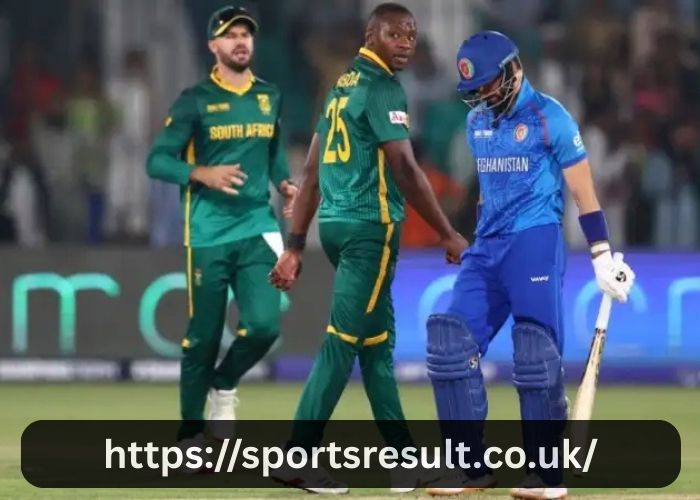
South Africa entered this game after an emphatic win against Canada, hoping to advance beyond the group stage with talented players like Quinton de Kock and Ryan Rickelton leading them forward in the high-stakes Afghanistan National Cricket Team Vs South Africa National Cricket Team clash.
Rahmanullah Gurbaz hit two sixes off of fast bowlers Marco Jansen and Kagiso Rabada to put Afghanistan back in contention and force another Super Over. This move propelled Afghanistan ahead by one run.
| Date | Event / Tournament | Result | Winner |
|---|---|---|---|
| Feb 21, 2025 | ICC Champions Trophy 2025 – Karachi | South Africa 315/6 beat Afghanistan 208 | South Africa by 107 runs |
| Sep 22, 2024 | 2024 ODI Series – Sharjah | South Africa 170/3 beat Afghanistan 169 | South Africa by 7 wickets |
| Sep 20, 2024 | 2024 ODI Series – Sharjah | Afghanistan 311/4 beat South Africa 134 | Afghanistan by 177 runs |
| Sep 18, 2024 | 2024 ODI Series – Sharjah | Afghanistan 107/4 beat South Africa 106 | Afghanistan by 6 wickets |
| Nov 10, 2023 | ICC Cricket World Cup 2023 – Ahmedabad | South Africa 247/5 beat Afghanistan 244 | South Africa by 5 wickets |
Afghanistan
Karim Sadiq and Taj Maluk’s parents likely never imagined that their sons, Karim Sadiq and Taj Maluk, would help unite Afghanistan through cricket – yet that is exactly what has occurred.
Taj was appointed coach of Afghanistan national cricket team under him, leading them to remarkable rise on international circuit.
Afghanistan are scheduled to compete at this year’s T20 World Cup co-hosted by United States and West Indies where they’ll face New Zealand and Papa New Guinea amongst others in Group D; nevertheless their prospects are promising despite having New Zealand and Papa New Guinea amongst opponents in Group B against them compared to them!
Afghanistan has experienced one of the fastest and most remarkable rises in global cricket history. Cricket first emerged during refugee camps in Pakistan during war years of the 1980s and 1990s, and quickly spread among young Afghans when they returned home after refugee camps had closed down.
By 1995, an Afghanistan Cricket Federation had been established; four years later they became associate members of the International Cricket Council before finally receiving full associate membership status, enabling them to participate in all events, such as One-Day Internationals (ODIs) and Test matches.
Afghanistan National Cricket Team has earned immense acclaim with their impressive series victories against top international sides like Pakistan and Sri Lanka in recent years, even qualifying for participation in the 2023 ODI World Cup.
During this time, the ACB also developed infrastructure such as Kabul International Cricket Stadium and improved training facilities. They began hosting ODIs and T20Is against full member nations to cement their place within global cricket and gain respect.
Afghanistan has experienced turbulent political and security dynamics for several decades now; cricket remains an effective means of maintaining popular support and improving societal morale despite these difficulties.
Cricket serves as a platform to bring the country together; street celebrations followed Afghanistan’s win against England at the 2023 ODI World Cup were evidence of its positive effect.
Cricket flourished despite conflict and uncertainty in Afghanistan due to its merit-based global rankings system, unlike in South Africa where cricket was banned over apartheid issues. Afghanistan was awarded prizes through fair competition; this shows just how powerful sports can be at uniting people even during challenging times.
South Africa
South Africa’s national cricket team, located in Johannesburg and administered by the South African Cricket Association, represents their nation internationally as members of ICC – world governing body of cricket. South Africa are well known one-day powers having reached five ODI World Cup semifinals and two T20 World Cup finals without winning either event yet.
South Africa first made their World Cup debut after returning to sport following apartheid, in 1992, where they made an immediate impression by topping their pool under captain AB de Villiers who went on to become tournament MVP.
South Africa reached the semis again in 2015 but failed to meet their goal of becoming World Champions by losing out against New Zealand.
South Africa are still considered one of the premier T20 teams worldwide and hope to regain their top spot when taking on Afghanistan in Port Elizabeth for round two on Sunday.
South Africa needs one win to reach the Super 8 stage of this tournament. They recently secured an emphatic victory against Canada with Aiden Markram scoring his half century and David Miller and Tristan Stubbs contributing 75 runs each in an unbroken stand; then Lungi Ngidi’s four-for was an added touch.
Afghanistan’s hopes of back-to-back Super 8 appearances were dashed by their loss to Pakistan, but not without struggle.
Afghanistan took South Africa close before drawing with two no-balls from Kagiso Rabada in the last over of regular play allowing Afghanistan a lifeline in a draw that might otherwise have gone to South Africa.
Rahmanullah Gurbaz hit three sixes during the first super over to try and reduce South Africa’s lead, but South African fielders stood firm and denied them an unlikely comeback. They then limited them to 19-2 in the second super over with Dewald Brevis and Azmatullah Omarzai both caught by Ngidi at point.
History
Cricket in Afghanistan serves as a powerful national unifier, uniting a divided country through war, politics and poverty. Cricket offers hope to its people after decades of violence and oppression, inspiring significant investments into infrastructure such as stadiums and training facilities.
Afghan government officials have recognized its growing popularity, taking an active interest in it. Indeed, football has helped boost Afghan economy by creating jobs for thousands of young Afghans and serving to promote peace and reconciliation between different groups within Afghan society.
Furthermore, hosting matches provides local communities with additional revenue; its global profile gives Afghani an international standing boost.
In 2007, when the national team won joint champion of the ACC T20 Trophy in Kuwait, it received an overwhelming reception. Many citizens across society hero worshiped its success as a sign of national unity and prosperity praised it by government officials and local authorities alike.
Since that time, the Afghanistan cricket team has garnered worldwide acclaim with stunning victories against some of cricket’s premier nations – such as England and Pakistan in 2023 in both ODIs and T20Is to demonstrate its ability to compete against top-tier sides.
Not only were their victories significant milestones in cricket history; but their victories also served to bring unity within an otherwise divided nation.
Though Afghanistan’s achievements are impressive, the International Cricket Council (ICC)’s decision to retain them as Full Members is dubious. According to its rules and regulations, Full Member status requires having women’s cricket teams and pathways established – something Afghanistan does not currently possess.
Furthermore, when Afghanistan can use all their funding for men’s team without incurring penalties from ICC makes it appear as though Afghanistan is receiving preferential treatment – similar to justifications used by Western leaders during apartheid South Africa’s existence during the 80s.
Schedule
Afghanistan cricket’s remarkable story begins in refugee camps in Pakistan during the war years of the 1980s and ’90s; after returning home, it expanded rapidly.
Star players such as Mohammad Nabi and Rashid Khan of Afghanistan elevated it further; their success in international leagues made them some of the country’s best-known celebrities, and many used this celebrity status to engage in charitable initiatives.
Since gaining affiliate membership of the ICC in 2001, their national team has begun competing in tournaments organized by this body and eventually earned full member status in 2013. This has given them more matches against better-resourced associates while finishing second in 2011-13 ICC World Cricket League Championship qualified them for their inaugural 50-over World Cup, where they performed admirably with great flair and energy.
Afghanistan have since established themselves in ODI cricket, defeating established rivals such as England and Sri Lanka to reach the 2023 World Cup semi-finals. Furthermore, Afghanistan have excelled in T20Is by topping both 2017 and 2024 ICC T20 World Cup standings – frequently outscoring higher profile teams along the way.
India may have struggled due to political unrest and lack of established home bases in Test cricket, yet they have managed to consistently perform above expectations in shorter formats such as T20.
Their victories inspire public celebrations that surpass any restrictions such as packed stadiums and social media fervor following big upsets such as their 2023 World Cup triumph over England; evidenced by packed stadiums and social media posts following this feat; this connects on-field achievement with social uplift demonstrates cricket’s power of uniting diverse populations by transcending ethnic and tribal differences.
Kabul National Cricket Stadium and Kandahar International Cricket Stadium serve as primary venues in Afghanistan for cricket matches, with Ghazi Amanullah International Cricket Stadium scheduled to open sometime between 2020-2025.